
Mahindra & Mahindra (M&M) is largely bullish among analysts following its Q4FY26 results, driven by strong SUV demand, a robust product pipeline, and improving growth visibility across segments, despite near-term margin pressures from rising commodity costs and potential weakness in the tractor cycle.

This is the time for India to plan forward fully, with the goal of Atmanirbharata, and energy security. The Persian Gulf is no longer a reliable source, points out Rajeev Srinivasan.

Elevated global crude oil and natural gas prices, driven by geopolitical developments in West Asia, could significantly influence the Government of India's fiscal position for 2026-27, according to a report by ratings agency Icra.

The Reserve Bank of India (RBI) has opted to keep its key interest rates unchanged at 5.25%, anticipating a global economic recovery following a ceasefire in the US/Israel-Iran conflict, despite ongoing inflationary pressures and currency fluctuations.

The rupee weakened to a record low against the US dollar due to Gulf tensions, rising oil prices, and foreign capital outflows.

If the conflict continues for a prolonged period, State-run oil companies may have to review retail fuel prices accordingly.

'FPIs are unlikely to return unless there is equilibrium between valuation premium and earnings growth.'

India's state-run oil marketing companies (OMCs) are projected to incur under-recoveries of approximately Rs 80,000 crore on liquefied petroleum gas (LPG) sales in FY27 if current loss levels persist, according to rating agency Icra.

Maruti Suzuki India's shares gained over 2.5 per cent after a strong March-quarter performance, with analysts maintaining a positive medium-term outlook driven by buoyant domestic market volumes, capacity expansion, and export growth, despite anticipated near-term margin pressures from higher commodity prices and startup costs.
Reliance Industries Limited (RIL) faced a challenging fourth quarter, with its energy business experiencing significant headwinds, leading to overall muted results and prompting analysts to adjust their outlook, even as consumer segments like Jio and retail demonstrated robust growth.

A significant structural shift is underway in India's gold market, with investment purchases projected to account for 35-40 per cent of total consumption by FY27, driven by geopolitical uncertainty, price momentum, and portfolio diversification.
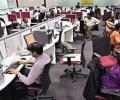
India's services sector growth reached a five-month high in April, with the HSBC India Services PMI Business Activity Index rising to 58.8, primarily driven by robust domestic demand and a shift from international to local suppliers amidst the West Asia crisis.

Analysts are revising down India Inc's financial year 2026-27 (FY27) earnings growth forecasts, citing persistently high crude oil prices above $100 a barrel due to the West Asia conflict, which is expected to dent corporate financial performance in the coming quarters.

Leading stock exchange BSE Ltd announced a 61 per cent increase in consolidated net profit to Rs 795.47 crore for the March quarter, driven by higher income, and reported its highest-ever performance in its 150-year history for the full financial year 2025-26.

Sanju Samson reminded the cricket world on Saturday why he is one of T20's most dangerous batters.

'What exactly is on the prime minister's mind, we do not know. But it feels like the government wants the country to be prepared for unseen challenges ahead.'

Air India, IndiGo and SpiceJet have told the government that the country's airline industry is under extreme stress and on the verge of "stopping operations", as they sought revision in ATF pricing and financial support.
Infosys Q4 results beat estimates, but weak FY27 guidance triggers cautious brokerage outlook and target price cuts. Should investors worry?

TMC leader Abhishek Banerjee criticised the Union government over the hike in commercial LPG prices, accusing the Centre of taking from the people while the Mamata Banerjee administration provides relief. He challenged the Prime Minister to release a white paper detailing central funds allocation in Cooch Behar.

Analysts predict that developments in West Asia and their impact on crude oil prices will heavily influence investor sentiment in the upcoming week. Global market trends, foreign investor activity, and rupee-dollar movement will also play a role.

The Indian rupee depreciated 20 paise to close at a fresh all-time low of 94.88 against the US dollar, driven by surging Brent crude oil prices, hovering around USD 115 per barrel, and persistent foreign capital outflows.

The Confederation of Indian Industry (CII) has urged the Indian government to gradually restore the Rs 10-per-litre cut in special additional excise duty on petrol and diesel over six to nine months. This move aims to relieve pressure on government finances as crude oil prices stabilise, without significantly impacting consumer sentiment.

Air India has deferred annual salary increments for its staff by at least one quarter and urged a "relentless focus on costs" due to external headwinds like the closure of Pakistan airspace, West Asia conflict, rupee depreciation, and a significant surge in aviation turbine fuel prices, though the airline has assured there will be no layoffs.
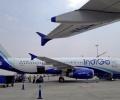
IndiGo airline will face near-term pressure on profitability from rising fuel prices following the escalation of conflict in West Asia, though it is likely to pass on higher costs to passengers over time because its ticket booking cycle is relatively short, according to a report by Moody's Ratings.

The petroleum ministry on Friday reaffirmed the government's commitment to maintaining stable petrol and diesel prices, despite India's high dependence on imports.

S&P Global Ratings warns that a sustained rise in crude oil prices to $130 per barrel could significantly slow India's economic growth, weaken fiscal metrics, and strain corporate and banking sector performance, potentially reducing growth by up to 80 basis points.

India's private sector activity saw a significant recovery in April, driven primarily by robust growth in manufacturing output and sales, following a three-year low in March attributed to the West Asia conflict.

Airfares to Southeast Asia have surged 25 to 30 per cent, driven by high demand and limited airline seat capacity.

The closure of the Strait of Hormuz has disrupted some 20 per cent of the global flows but even if it opens, damages to production facilities in the region will take time to repair, points out Sunita Narain.

Indian benchmark indices Sensex and Nifty experienced volatility due to conflicting developments in West Asia, including reports of the Strait of Hormuz closure, which led to a rebound in crude oil prices and heightened investor concerns about supply disruptions and inflation.

Analysts say long-term investors may still benefit, but recommend limiting bullion exposure to around 10 per cent.

Despite the ongoing West Asia conflict causing global trade route disruptions, Mercedes-Benz India reports resilient customer demand, particularly for its new electric CLA sedan, though it faces challenges with component supply delays and escalating shipping costs.
TMC leader Abhishek Banerjee criticises the Union government over the hike in commercial LPG prices, accusing the Centre of 'taking' from people while the Mamata Banerjee administration provides relief. He also challenged the BJP to present a report card of its work in Rajganj constituency.

Foreign universities are unlikely to gain major ground in India's higher education market in the near term, as students and families continue to prioritise return on investment over brand value in a highly price-sensitive sector.

Indian benchmark equity indices experienced a significant downturn, with the Sensex plummeting over 800 points and the Nifty falling sharply, driven by rising crude oil prices, geopolitical tensions, and foreign capital outflows.

US President Donald Trump stated that military strikes against Iran could resume if they 'misbehave,' even as he reviews a new proposal from Tehran aimed at ending the paused conflict.
Disciplined investors who ignore short-term fear build significant long-term wealth, notes Ramalingam Kalirajan
Indian benchmark indices Sensex and Nifty experienced a decline due to renewed geopolitical concerns in the Strait of Hormuz, a strained US-Iran ceasefire, and the rupee hitting a record low against the US dollar.

AIADMK general secretary Edappadi K Palaniswami has announced a series of welfare measures, including free refrigerators for rice ration cardholders, if the party wins the 2026 Assembly election in Tamil Nadu.

Indian stock market benchmark indices Sensex and Nifty experienced a significant decline, driven by escalating tensions in the Middle East and rising crude oil prices.
 © 2026 Rediff.com - Advertise with us - Disclaimer - Privacy Policy - Sitemap - Feedback - About us - Terms of use - Grievances